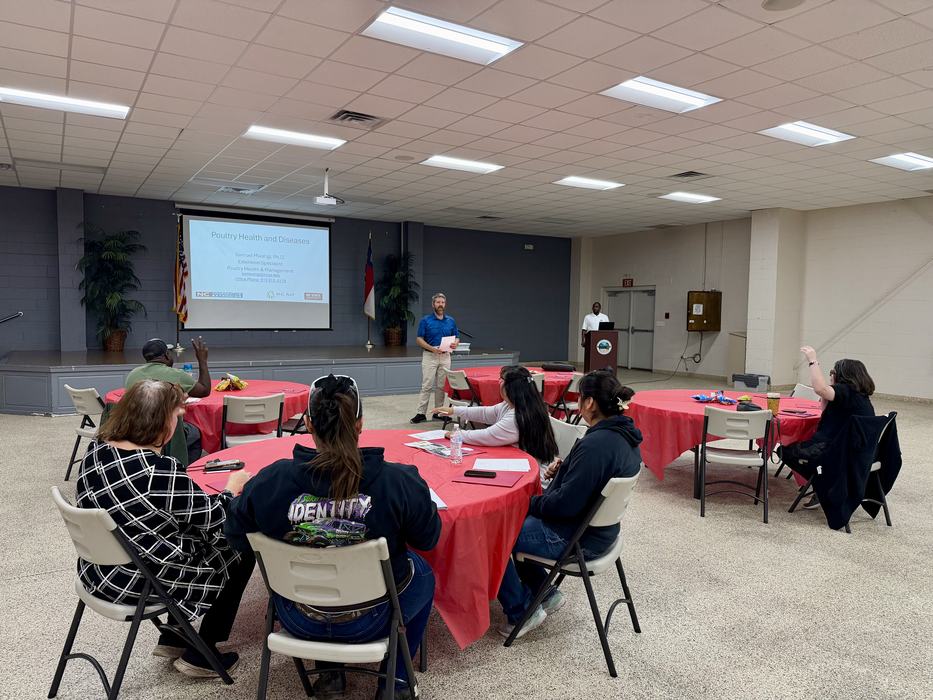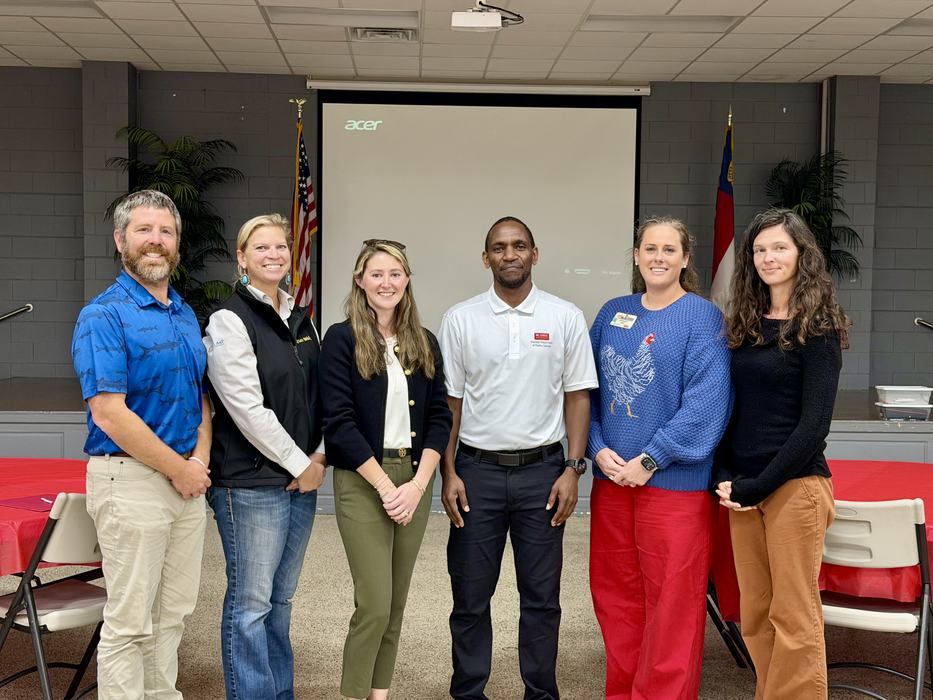
For the past three years, Jones County Cooperative Extension has held an educational program in conjunction with our Full Circle Project. This year, our program was about backyard poultry production and specifically on health and diseases. Since Jones County is very rural, there are many backyard poultry producers, as well as those who are interested in learning more about how to get started with backyard poultry. A survey was sent out via our social media pages and email listservs, asking our clientele what topics they were most interested in learning more about and they chose health and diseases.
To address this need, we invited Dr. Sam Mwangi from the NCSU Prestage Department of Poultry Science to discuss health and diseases at our Full Circle Project program. To prepare for the chicken give-a-way part of the program (which is a staple to the project), 4-H'ers actively participated in raising chicks, culminating in a chicken show in May. The livestock agent's assistance was crucial in preparing the 4-H'ers for the show. Following the exhibition, the broilers were processed in a community poultry processing demonstration led by the Eastern Area Specialized Poultry Agent. The outcome was 25 ready-to-cook birds that were then frozen for distribution during the Full Circle Project.
After the workshop evaluations showed 100% of participants were either Satisfied or Very Satisfied with the program as well as 100% said the information was easy to understand. There was a wide range of knowledge before the workshop from Very Low to Very High and 100% of participants noted their knowledge level after the program was Moderate to Very High. Three participants completed the section on the evaluation of how much money they thought the class would save them: one responded $1-$500, one responded $500-$1,000, and one responded $1,000+! One participant said what she liked most about the training workshop was "excellent knowledge shared by the presenter and team."
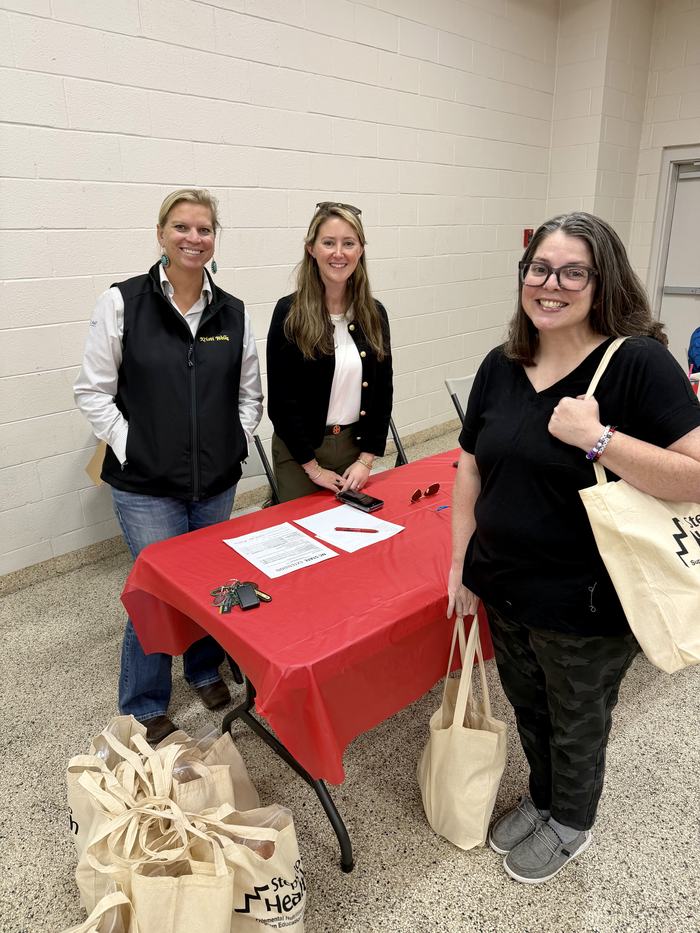
The frozen broilers, a product of the earlier Coastal Plains Chicken Project, became a significant part of the program by being distributed to community members and participants of the class. In the end, the collaborative effort of the Cooperative Extension staff resulted in a community success story that not only provided tangible support during the holidays but also imparted valuable lessons in agriculture, food safety, and community collaboration. Our Full Circle Program exemplified the positive impact that dedicated individuals and a well-executed project can have on a community.