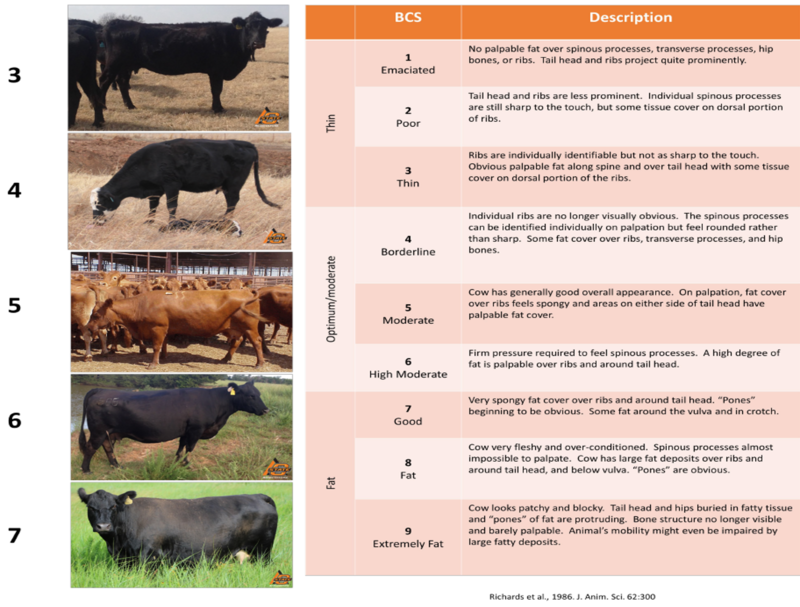
Body condition scoring (BCS) in beef cattle uses a numeric score to estimate the nutritional status of the cow. Ideal live weight varies from cow to cow, but ideal body condition is the same from cow to cow. Body condition scores range from 1 to 9 with 1 being extremely thin and 9 being extremely obese. The ideal body condition for a beef cow ranges from 5-7.
There are 6 areas on the body of a beef animal that can be used to determine their body condition score:
- back of the animal
- tail head
- the pins
- hooks
- ribs
- the brisket of the animal
There are three times a year BCS should be addressed, those important times are at weaning, breeding and ninety days before calving. There is a strong link between the body condition of a cow and her reproductive performance. A cow should be at optimal body condition before calving. BCS is related to a cow’s conception rate, estrus interval, calving interval, colostrum quality and amount, and her milk production.
- Main problems seen with animals in lower body condition scores (1-4):
- Failure to cycle
- Failure to conceive
- Increased calving interval
- low quality colostrum
- Decreased calf vigor
- lower weaning weights
- On the flip side there are also problems with cows that are on the obese side with a BCS of 8-9:
- Costly to maintain
- Increased dystocia
- Mobility issues
- Failure to conceive
- Failure to cycle
To help eliminate these issues it is best to choose a calving season that is most compatible with the forage program on your farm. Cows and calves should be moved to good pasture by the time the calf is about 30 days of age. A beef cow with a nursing calf should be able to meet most of her nutritional needs on good pasture or forage and a mineral supplement.
Photos and chart by: National Academies of Sciences, Engineering, and Medicine. 2016. Nutrient Requirements of Beef Cattle: Eighth Edition. Washington, DC: The National Academies Press.
For more reading, here is an article from UGA extension