Managing livestock is already challenging in good weather conditions, but when it comes to managing livestock in cold weather, ice and snow there are a few extra things that need to be considered. The same general rules can be applied to all livestock, whether it is sheep, goats, horses, or cows.
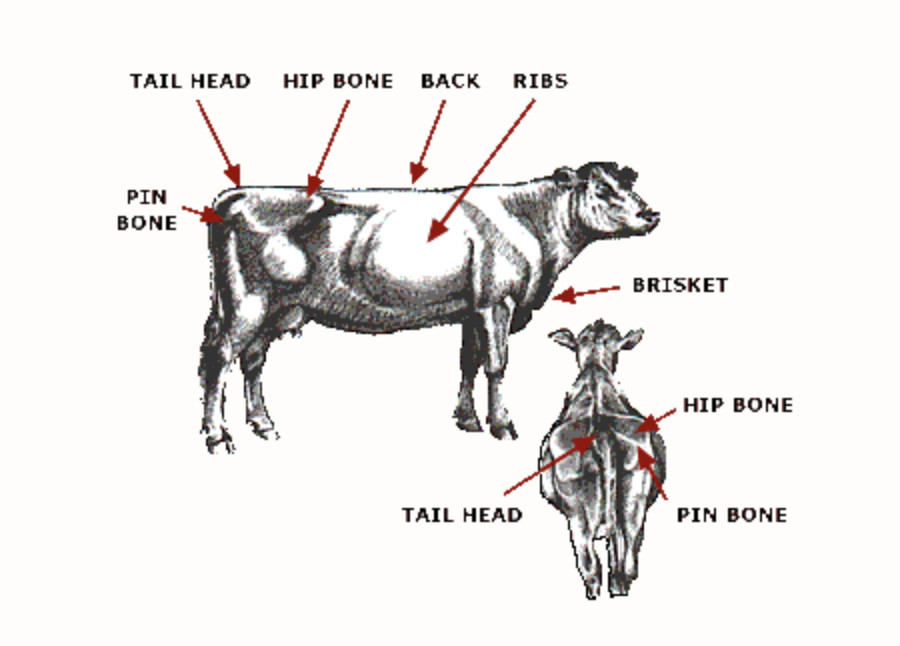
Going into the cold winter months, it is important to be aware of a herd’s body condition scores (BCS). BCS measure the fat cover or body reserves on an animal and range from 1-9 with 1 being very thin and 9 being very fat. Obviously, going into winter with a higher BCS is important. While thick winter coats can hide poor body conditioning, BCS allows for a hands-on and visual process for measuring body reserves. When preforming a BCS the places that need to be palpated, or felt, are the backbone, ribs, hips, pinbones, tailhead, and brisket. When feeling these areas, you should be looking for fat coverage. If bones are easily felt, then the cow will have a lower BCS; however, if bones are not easily felt, or not felt at all, then the cow will have a higher BCS.
Another thing to take into account during cold weather is water intake. Water is the most important nutrient for all living things. Although cows, while grazing, will consume some water from ingesting snow and ice, it is not nearly enough. A beef cow’s water requirements are roughly 14 gallons a day. If the herd spends all day eating snow and ice to meet their water requirement and not grazing forage, then their water and/or nutritional needs will not be met. Ice and snow consumption also lowers body temperature and increases maintenance energy needs. Keeping water temperatures and above will encourage water intake. Tank heaters can help keep water a desirable temperature but it is important that you follow the manufacturer’s instructions on installation. Also be sure that you have the correct electrical sources, such as drop cords, to help prevent fires or other damage to equipment and animals.
Shelter is another important factor when wintering livestock. It is not feasible to put whole herds in barns and stalls, but a structure that allows livestock to get out of the wind, rain and snow can help decrease energy requirements, as well as keep animals comfortable. If a structure is available to livestock, be sure that the ground bedding (shavings or straw) is clean and dry. The bedding will help insulate livestock from the cold ground.
The most important implication of winter herd management is feeding. When the temperature drops, a cow’s energy requirement goes up. Energy can be supplemented through grain or additional roughage such as hay. Hay is most commonly used to supplement energy due to a lower cost, as well as being safe to feed in large amounts. When feeding hay, the animal generates more body heat in digestion and it takes longer to eat than a bucket of feed. It’s important to keep in mind, if a herd is already consuming the max amount of dry matter or on a low-quality forage, additional nutrients will need to be supplemented. These extra nutrients can be given in forms such as mineral tubs or grain.
Weather conditions are out of our control but we can control our herd’s ability to handle harsh weather. Giving livestock a shelter to get out of the wind, rain and snow can decrease energy requirements, as well as making sure to provide clean accessible water and meeting nutritional requirements with hay or grains. By going into winter with average or just above average BCS we are ensuring the livestock will have enough reserves to keep warm.
If you have any questions concerning wintering livestock, please email Katie Carter at katie_carter@ncsu.edu